from the desk of the founder
WORKSHOP LEDGER: 000 — UNSEALED BASELINE
INTERCHANGE: B. to Founder // Founder to B.
DATE: 5th March 2026
My dearest Founder and friend,
We have a major bottleneck on the ground. Clients are drowning in data compliance mandates, privacy liabilities, and bloated software that slows down their daily operations. The frontline teams are experiencing massive operational friction trying to manage these risks manually. We need a concrete intervention strategy immediately.
Ever yours in the field,
B. — Field Operations
We have a major bottleneck on the ground. Clients are drowning in data compliance mandates, privacy liabilities, and bloated software that slows down their daily operations. The frontline teams are experiencing massive operational friction trying to manage these risks manually. We need a concrete intervention strategy immediately.
Ever yours in the field,
B. — Field Operations
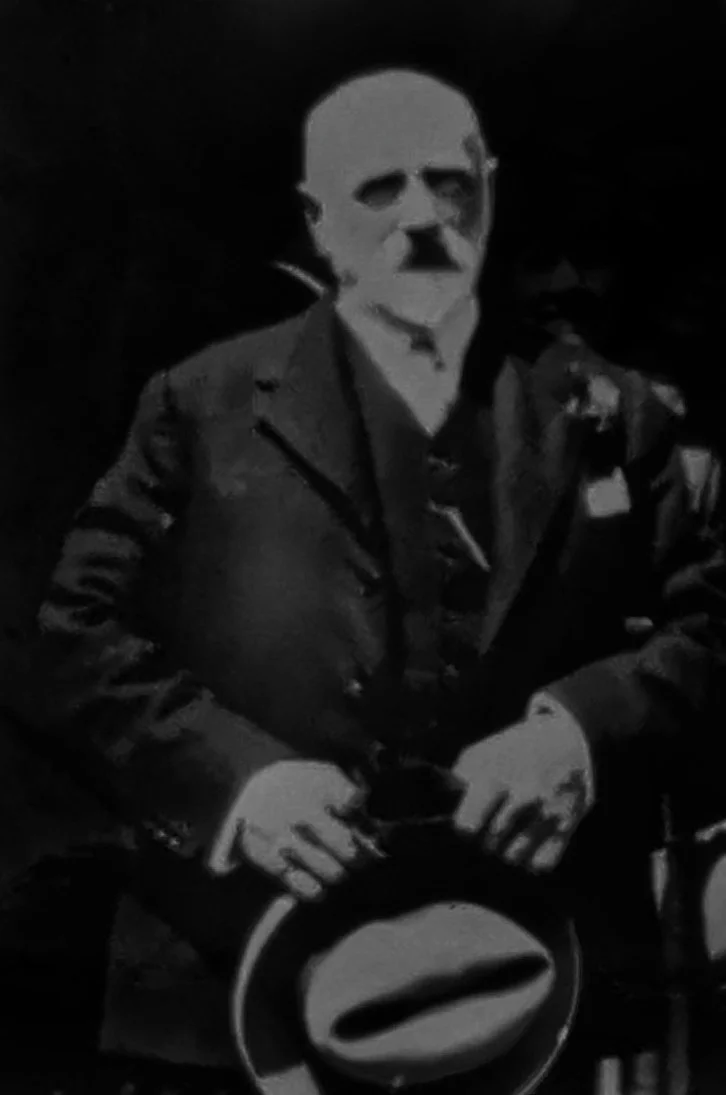
My dearest B,
The old workshop mandate has been officially translated into the following operational standard:
- the blueprint of custom framework: Bespoke Data Architecture. Custom-engineered tracking environments designed to align perfectly with existing frontline workflows, entirely eliminating the need for off-the-shelf software compromises.
- the relief from industrial tribute: Zero-Subscription Mechanics. Permanent, desktop-based engines built without recurring licensing fees, cloud-hosting traps, or forced digital ecosystems.
- the deployment of automatic clockwork: Automated Logic Integration. Background programming and silent automated logic designed to instantly execute repetitive administrative tasks, drastically reducing manual data entry and operational friction.
- the fortification of structural armor: Compliance & Risk Shielding. Secure, closed-loop data handling frameworks engineered to protect against systemic human error and modern privacy liabilities.
My dearest B,
Iam simply delighted to report that the ink has dried in London. The paperwork is filed, and "Teak, Amber & Oak Ltd" is officially etched into the great bureaucratic ledger. It is a marvellous name, isn't it? It carries the scent of sawdust and quiet, deliberate industry.
Yet, as we both know, a company registration number is just a curious little string of digits. The true spirit of this endeavour was forged in the soot and sparks of a very different era. It feels like a mere forty years since the Employers’ Liability Act of 1880 turned the industrial world entirely on its head. Practically overnight, the masters of industry realised they were utterly exposed. They required sudden shielding—not just from the snapping iron and heavy gears of the factory floor, but from the terrifying, invisible threat of legal and financial ruin brought on by simple human error. Our family responded by building heavy, mechanical shunting mechanisms to absorb that risk. We built physical shields.
Today, we open these digital doors because I have watched the modern employer wrestling with a new breed of phantom. The heavy iron is gone, but the crushing liability of data compliance, privacy mandates, and bloated, labyrinthine software is slowly suffocating highly capable teams. We are not here to sell them more software, B. We are here to build their shields.
The theatre of the past is a wonderful place to visit, B, but our mechanics operate firmly in the present. The workbench is clear. The first ledger is open.
I remain, as ever, at the drafting table.
TF ❧
Iam simply delighted to report that the ink has dried in London. The paperwork is filed, and "Teak, Amber & Oak Ltd" is officially etched into the great bureaucratic ledger. It is a marvellous name, isn't it? It carries the scent of sawdust and quiet, deliberate industry.
Yet, as we both know, a company registration number is just a curious little string of digits. The true spirit of this endeavour was forged in the soot and sparks of a very different era. It feels like a mere forty years since the Employers’ Liability Act of 1880 turned the industrial world entirely on its head. Practically overnight, the masters of industry realised they were utterly exposed. They required sudden shielding—not just from the snapping iron and heavy gears of the factory floor, but from the terrifying, invisible threat of legal and financial ruin brought on by simple human error. Our family responded by building heavy, mechanical shunting mechanisms to absorb that risk. We built physical shields.
Today, we open these digital doors because I have watched the modern employer wrestling with a new breed of phantom. The heavy iron is gone, but the crushing liability of data compliance, privacy mandates, and bloated, labyrinthine software is slowly suffocating highly capable teams. We are not here to sell them more software, B. We are here to build their shields.
The theatre of the past is a wonderful place to visit, B, but our mechanics operate firmly in the present. The workbench is clear. The first ledger is open.
I remain, as ever, at the drafting table.
TF ❧
WORKSHOP LEDGER: 001 — VISUAL ARCHITECTURE MANIFESTO
DATE: 14th April 2026
"Mismatched software interfaces causing cognitive fatigue and sensory overload out here, Founder. Branding must sit camouflaged."
My dearest B,
The visual architecture of every tool leaving the desk maps straight to structural focus rules:
- the mechanism of structural insulation: Neuro-Inclusive Formatting. High-contrast, dark UI environments built to cut screen glare and cognitive fatigue for all field operators.
- the principle of industrial camouflage: Bespoke Client Integration. Full camouflage skin capability matching client corporate identity while background mechanics stay zero-fault.
- the extraction of baseline utility: Signal-to-Noise Optimisation. Absolute destruction of non-functional graphic elements to isolate core utility metrics.
- the discipline of ledger layout: Grid-Based Structural Logic. Mathematical grid precision mirroring traditional layout books to make terminal data tracking natural.
My dearest B,
Itook a stroll past the digital marketplace this morning, and heavens above, the absolute noise of it all! The modern software vendors have turned their interfaces into a chaotic carnival. It is an endless parade of blinding white screens, gaudy primary colours, and dreadful little cartoon mascots all clamouring for our attention. It reminded me entirely of the cheap penny arcades at the seaside—designed to distract the senses rather than facilitate actual work.
We shall have absolutely none of that here. Everyone deserves a workspace they can thrive in. This visual restraint serves a far higher purpose than mere taste. A chaotic, glaring interface is a literal barrier to entry for many brilliant, capable minds. The modern corporate obsession with brightly lit, overly animated software actively breeds cognitive fatigue. We engineer these dark, quiet environments specifically because they are neuro-inclusive. We recognise that neurodivergent operators often suffer the most under the weight of poorly considered, over-stimulating design.
The aesthetic of Teak, Amber & Oak Ltd must reflect the profound solemnity of our architecture. Cast your mind back to the old finishing room at dusk. There was no visual clutter. Just heavy shadows, the deep, dark lustre of oiled wood, and the sharp, amber glow of the task lamp illuminating exactly what needed to be seen, and nothing more. We must also recognise that our structural ledgers will be deployed behind the lines of other companies. While our underlying architecture remains strictly our own, we are perfectly willing to paint the outer hull in the client's colours. White-labelling is simply good operational camouflage; it allows our mechanics to sit flush within their existing environment without causing operational friction.
Let the others run their brightly lit carnivals, B. We shall keep the lights low, the environment accessible, and the engines running flawlessly in the dark.
TF ❧
Itook a stroll past the digital marketplace this morning, and heavens above, the absolute noise of it all! The modern software vendors have turned their interfaces into a chaotic carnival. It is an endless parade of blinding white screens, gaudy primary colours, and dreadful little cartoon mascots all clamouring for our attention. It reminded me entirely of the cheap penny arcades at the seaside—designed to distract the senses rather than facilitate actual work.
We shall have absolutely none of that here. Everyone deserves a workspace they can thrive in. This visual restraint serves a far higher purpose than mere taste. A chaotic, glaring interface is a literal barrier to entry for many brilliant, capable minds. The modern corporate obsession with brightly lit, overly animated software actively breeds cognitive fatigue. We engineer these dark, quiet environments specifically because they are neuro-inclusive. We recognise that neurodivergent operators often suffer the most under the weight of poorly considered, over-stimulating design.
The aesthetic of Teak, Amber & Oak Ltd must reflect the profound solemnity of our architecture. Cast your mind back to the old finishing room at dusk. There was no visual clutter. Just heavy shadows, the deep, dark lustre of oiled wood, and the sharp, amber glow of the task lamp illuminating exactly what needed to be seen, and nothing more. We must also recognise that our structural ledgers will be deployed behind the lines of other companies. While our underlying architecture remains strictly our own, we are perfectly willing to paint the outer hull in the client's colours. White-labelling is simply good operational camouflage; it allows our mechanics to sit flush within their existing environment without causing operational friction.
Let the others run their brightly lit carnivals, B. We shall keep the lights low, the environment accessible, and the engines running flawlessly in the dark.
TF ❧
WORKSHOP LEDGER: 002 — SUBTERRANEAN ANALYSIS
DATE: 12th May 2026
"Public consultations hoarding vast PII libraries trying to prove regional residence. GDPR liabilities staggering. We need a digital turnstile framework immediately."
My dearest B,
Our engineering rules execute verified insulation without profile tracking:
- the calculation of perimeter threshold: Intent Location & Residence Verification. Location cross-referencing against the physical impact zone to divide true stakeholders from external noise.
- the dynamic turnstile logic: Zero-PII Timestamping. Instant background generation of input verification (time, date, sentiment) while throwing away the identifier token permanently.
- the record of isolated performance: Training Attendance Logging. Tracking confirmation vectors of mandatory internal metrics while instantly dropping individual tracking records.
My dearest B,
Ispent Sunday afternoon entirely lost in a stack of rather dusty architectural surveys from the turn of the century. When the Central London Railway—the original "Twopenny Tube"—first opened its gates in 1900, it was a marvel of subterranean madness. But it was the sheer administrative theatre that followed between 1906 and 1907, during the excavation of the Bakerloo, Piccadilly, and Northern lines, that truly made me chuckle.
Imagine the scene, B! To carve massive tunnels beneath a living, breathing London, the railway engineers had to conduct endless public consultations. They had to verify the exact residences of the citizens above, ensuring they were strictly addressing the concerns of those whose teacups were actually going to rattle. If a gentleman from Richmond complained about a tunnel being dug in Camden, the engineers politely tipped their hats and ignored him. He was not in the impact zone.
Today, the modern public consultation is a far more treacherous affair. When a firm proposes a new structure, the lines are immediately blurred between the genuinely affected few and the outraged masses who live three counties over but wish to join the fray. The modern "rent-a-mob" makes it nearly impossible for a firm to distinguish a genuine local stakeholder from orchestrated, external noise. To filter this noise, modern firms are forced to collect and hoard the private addresses and details of every single person who submits a comment. In trying to find the genuine locals, they accidentally build massive databases of Personally Identifiable Information (PII). They end up holding a terrifying legal liability just to prove who was actually in the room.
We are building an architecture of pure validation, B. We verify the presence, we record the shadow, but we let the person walk away entirely unrecorded. The workbench is clear. The next ledger is open.
TF ❧
Ispent Sunday afternoon entirely lost in a stack of rather dusty architectural surveys from the turn of the century. When the Central London Railway—the original "Twopenny Tube"—first opened its gates in 1900, it was a marvel of subterranean madness. But it was the sheer administrative theatre that followed between 1906 and 1907, during the excavation of the Bakerloo, Piccadilly, and Northern lines, that truly made me chuckle.
Imagine the scene, B! To carve massive tunnels beneath a living, breathing London, the railway engineers had to conduct endless public consultations. They had to verify the exact residences of the citizens above, ensuring they were strictly addressing the concerns of those whose teacups were actually going to rattle. If a gentleman from Richmond complained about a tunnel being dug in Camden, the engineers politely tipped their hats and ignored him. He was not in the impact zone.
Today, the modern public consultation is a far more treacherous affair. When a firm proposes a new structure, the lines are immediately blurred between the genuinely affected few and the outraged masses who live three counties over but wish to join the fray. The modern "rent-a-mob" makes it nearly impossible for a firm to distinguish a genuine local stakeholder from orchestrated, external noise. To filter this noise, modern firms are forced to collect and hoard the private addresses and details of every single person who submits a comment. In trying to find the genuine locals, they accidentally build massive databases of Personally Identifiable Information (PII). They end up holding a terrifying legal liability just to prove who was actually in the room.
We are building an architecture of pure validation, B. We verify the presence, we record the shadow, but we let the person walk away entirely unrecorded. The workbench is clear. The next ledger is open.
TF ❧
WORKSHOP LEDGER: 003 — INDEPENDENT SOVEREIGNTY
DATE: 8th June 2026
"Owners bled dry by software landlords renting out toolboxes via ongoing subscriptions. Access held hostage if payments stall. Restore toolkit ownership."
My dearest B,
The "Owned Architecture" tool parameters are codified as standard:
- the execution of craft sovereignty: Zero-Subscription Mechanics. Bespoke engines delivered as local permanent units. Zero recurring tolls, hosting traps, or rented infrastructure ties.
- the location of absolute storage: Desktop-Anchored Architecture. Local execution processing exclusively within the client vault to stop cloud leaks or sudden market line price hikes.
- the filtration of excess weight: Anti-Bloat Configuration. Stripping universal menu weight to map engines exactly to operational line realities.
- the protection of ledger contents: Unhostaged Data Extraction. Total structural raw data visibility belongs exclusively to the business owner, not the vendor asset books.
My dearest B,
Itook to the floor last Thursday at one of these modern "networking" assemblies. A fascinating, if slightly exhausting, affair. I spoke with dozens of independent proprietors and small business owners, and I was struck by a pervasive, quiet desperation amongst them. They are being bled dry, B, and the wound is entirely administrative.
Cast your mind back to the cabinet makers at the Lebus factory. A craftsman’s tools were his livelihood. He purchased his planes, his chisels, and his saws. He maintained them, he sharpened them, and they belonged to him. Imagine the sheer, unadulterated absurdity of telling a Victorian carpenter that he must pay a monthly toll to a "Chisel Landlord" simply to unlock his toolbox every morning. Imagine telling him that if he misses a payment, his own workbench will instantly vanish, taking his half-finished cabinets with it. He would have chased you out of the workshop with a heavy mallet.
Yet, this is exactly the indignity modern business owners accept as standard. The digital marketplace is entirely dominated by the "subscription model." Software vendors act as absentee landlords, renting out bloated, one-size-fits-all accounting and tracking platforms. The business never actually owns its infrastructure; it simply pays a never-ending ransom to access its own financial data. If they stop paying the monthly toll, the digital locks are changed, and their own ledgers are held hostage. We must return the tools to the craftsmen.
We are not digital landlords, B. We are toolmakers. We build the engine, we hand over the keys, and we allow the proprietor to get back to their trade. The workbench is clear. The next ledger is open.
TF ❧
Itook to the floor last Thursday at one of these modern "networking" assemblies. A fascinating, if slightly exhausting, affair. I spoke with dozens of independent proprietors and small business owners, and I was struck by a pervasive, quiet desperation amongst them. They are being bled dry, B, and the wound is entirely administrative.
Cast your mind back to the cabinet makers at the Lebus factory. A craftsman’s tools were his livelihood. He purchased his planes, his chisels, and his saws. He maintained them, he sharpened them, and they belonged to him. Imagine the sheer, unadulterated absurdity of telling a Victorian carpenter that he must pay a monthly toll to a "Chisel Landlord" simply to unlock his toolbox every morning. Imagine telling him that if he misses a payment, his own workbench will instantly vanish, taking his half-finished cabinets with it. He would have chased you out of the workshop with a heavy mallet.
Yet, this is exactly the indignity modern business owners accept as standard. The digital marketplace is entirely dominated by the "subscription model." Software vendors act as absentee landlords, renting out bloated, one-size-fits-all accounting and tracking platforms. The business never actually owns its infrastructure; it simply pays a never-ending ransom to access its own financial data. If they stop paying the monthly toll, the digital locks are changed, and their own ledgers are held hostage. We must return the tools to the craftsmen.
We are not digital landlords, B. We are toolmakers. We build the engine, we hand over the keys, and we allow the proprietor to get back to their trade. The workbench is clear. The next ledger is open.
TF ❧
WIRE ROUTING: 004 — PRIORITY TELEGRAM TRANSMISSION
DATE: 17th July 2026 // TIME STAMP OVERRIDE
B.
INBOUND WIRE // FIELD OP: ARTICLE V PRIVACY BURDEN CRUSHING MANUALLY ACCROSS THE SECTOR STOP WE ARE EXPOSED STOP SAFEGUARD MANDATORY STOP B.
B—
BREAKTHROUGH SECURED LAST EVENING STOP SYSTEM ENGINES DESIGNED TO ERASE COMPLIANCE BURDENS MATHEMATICALLY STOP SPECIFICATIONS ATTACHED:
- the mechanism of disappearance: Cryptographic Tokenization. Instant entry translation into secure math proxy tokens. Staff handle zero raw identifiers.
- the architecture of blinded operation: Zero-Knowledge Frameworks. Metric compilation happens behind secure blind fields. System processes data while operators hold zero tracking lines.
- the application of irreversible ciphers: Mathematical Hashing. Long term storage structures fractured into irreversible character sets. Exposure risks drop to absolute zero.
B—
Whilst deployed in the field last evening, I happened by chance to witness a performance by the escapologist, Houdini. A truly fantastical anomaly. One moment the man stood bound before our very eyes, and in the next, he had entirely dematerialized. It was quite peculiar; I even deployed my opera glasses to scrutinize the stage, yet he was simply gone.
This spectacle invigorated my focus. It occurred to me that what we require for the operational ledgers is precisely this effect—but executed through structural engineering rather than smoke and mirrors. We do not need a cheap trick; we need to make the Personally Identifiable Information (PII) vanish with mathematical certainty.
We are not performing magic, B. We are building a mathematically perfect disappearing act. A compliance breach is structurally impossible if the target is no longer in the room.
I remain, as ever, at the drafting table.
TF ❧
Whilst deployed in the field last evening, I happened by chance to witness a performance by the escapologist, Houdini. A truly fantastical anomaly. One moment the man stood bound before our very eyes, and in the next, he had entirely dematerialized. It was quite peculiar; I even deployed my opera glasses to scrutinize the stage, yet he was simply gone.
This spectacle invigorated my focus. It occurred to me that what we require for the operational ledgers is precisely this effect—but executed through structural engineering rather than smoke and mirrors. We do not need a cheap trick; we need to make the Personally Identifiable Information (PII) vanish with mathematical certainty.
We are not performing magic, B. We are building a mathematically perfect disappearing act. A compliance breach is structurally impossible if the target is no longer in the room.
I remain, as ever, at the drafting table.
TF ❧
WORKSHOP LEDGER: 005 — RECONSTRUCTION AUDIT SHEET
DATE: Mid-July 2026
Operators moving data manually across mismatched platform blocks. High mechanical error rates. Severe process fragmentation present.
My dearest B,
Engineering corrections applied. System rules for mechanical elegance:
- the design of continuous mechanics: Single-Movement Automation. Internal processing blocks run full sequences via silent code string routines, ending multi-step manual tracking loops.
- the pruning of dead weight: Eradication of Redundancy. Absolute streamlining of step patterns to register data inputs exactly once across operational frameworks.
- the installation of hidden power: Silent Background Mechanics. Relocating process loads behind deep high-contrast operator panels to lower friction markers.
- the rejection of external fixtures: Frictionless Architecture. Closed-loop, self-contained desktop engines built to run standalone without rented software extension hooks.
My dearest B,
Iwas reminded this morning of a remarkably pleasant afternoon I once spent in the company of Mr. William Heath Robinson. A marvellous draughtsman, and a thoroughly gentle soul. We sat in his studio looking over his latest illustrations—those wonderfully absurd, tangled contraptions where a dozen pulleys, a knotted string, a steam kettle, and a very confused cat are all required simply to strike a match and light a gentleman’s cigar. We laughed until our ribs ached. It was, of course, a magnificent joke.
Yet, as I peer into the operations of modern businesses today, I realise with creeping horror that they have taken his comedy as an instruction manual. The modern corporate workflow is a Heath Robinson machine of the highest order. To generate a single monthly report, an operator must export data from one bloated piece of software, manually copy it into a spreadsheet, email it to a supervisor, wait for a digital signature, and then paste it into a third platform that charges them a monthly subscription just to host the tangled mess. It is administrative theatre. It is exhausting, it invites catastrophic human error, and it slowly breaks the spirit of the frontline worker.
Our mandate is the absolute eradication of these digital contraptions. When we build, we do not use string and tape. We build clean, silent engines.
Mr. Robinson’s glorious contraptions belong strictly in a picture book, B. They have absolutely no place in a professional workspace. The workbench is clear. The next ledger is open.
TF ❧
Iwas reminded this morning of a remarkably pleasant afternoon I once spent in the company of Mr. William Heath Robinson. A marvellous draughtsman, and a thoroughly gentle soul. We sat in his studio looking over his latest illustrations—those wonderfully absurd, tangled contraptions where a dozen pulleys, a knotted string, a steam kettle, and a very confused cat are all required simply to strike a match and light a gentleman’s cigar. We laughed until our ribs ached. It was, of course, a magnificent joke.
Yet, as I peer into the operations of modern businesses today, I realise with creeping horror that they have taken his comedy as an instruction manual. The modern corporate workflow is a Heath Robinson machine of the highest order. To generate a single monthly report, an operator must export data from one bloated piece of software, manually copy it into a spreadsheet, email it to a supervisor, wait for a digital signature, and then paste it into a third platform that charges them a monthly subscription just to host the tangled mess. It is administrative theatre. It is exhausting, it invites catastrophic human error, and it slowly breaks the spirit of the frontline worker.
Our mandate is the absolute eradication of these digital contraptions. When we build, we do not use string and tape. We build clean, silent engines.
Mr. Robinson’s glorious contraptions belong strictly in a picture book, B. They have absolutely no place in a professional workspace. The workbench is clear. The next ledger is open.
TF ❧